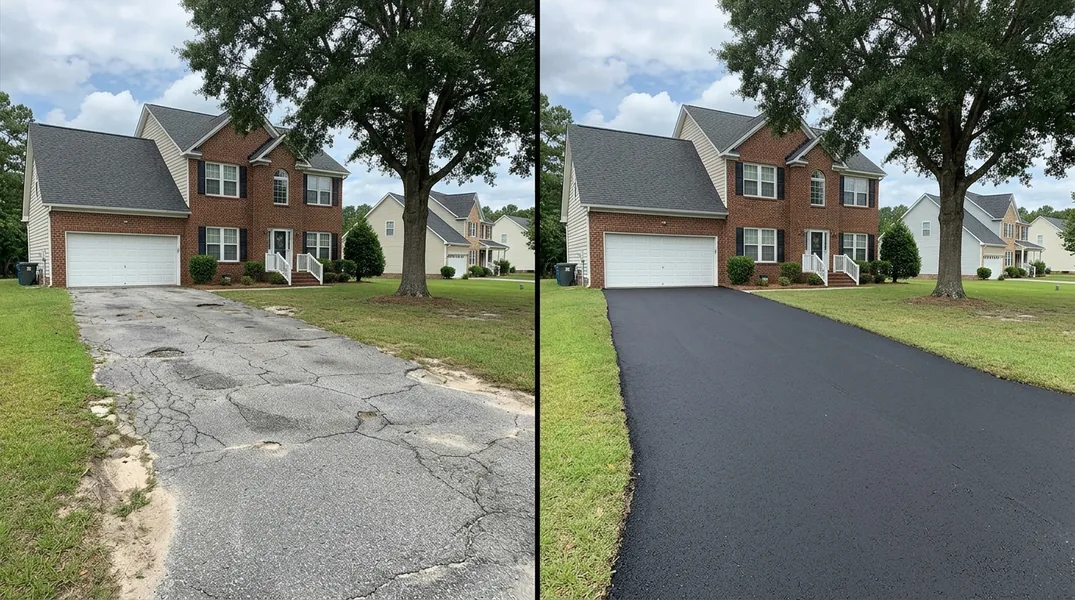
Signs Your Driveway Needs Attention
Your driveway is one of the first things visitors see when they arrive at your home, and it takes a beating from weather, traffic, and time. In Wilmington, where humidity and occasional heavy rainfall are common, asphalt driveways face unique challenges that can accelerate wear and tear. Knowing when your driveway needs attention is the first step in making the right decision about repair versus replacement.
Common warning signs include cracks that are widening, potholes that collect water, fading color, and surface deterioration. Small cracks might seem harmless, but they allow water to seep beneath the asphalt, weakening the base and creating larger problems down the road. If you notice multiple cracks spreading across your driveway or soft spots where the surface feels spongy underfoot, these are clear indicators that professional assessment is needed. The good news is that not every damaged driveway requires complete replacement. Sometimes targeted Driveway Repair or Pothole Repair & Asphalt Patching can extend your driveway's life significantly.
When Repair Makes Sense
Driveway Repair is typically the most cost-effective option when damage is localized and your driveway is still structurally sound. If your driveway is less than 15 to 20 years old and the damage affects less than 30 percent of the total surface area, repair is usually the way to go. This might include filling cracks, patching potholes, or addressing minor surface issues before they become major problems. Homeowners in Wilmington often find that addressing small issues early prevents the need for expensive full replacement later.
Another repair option to consider is Asphalt Resurfacing & Overlay, which involves applying a new layer of asphalt over the existing surface. This approach works well when the base is still solid but the top layer has deteriorated. Resurfacing is faster and less expensive than full replacement, and it can add 7 to 10 years to your driveway's life. The decision between patching, sealing, and resurfacing depends on the extent of damage and the current condition of the underlying base.
When Full Replacement Is Necessary
Full replacement becomes the better choice when your driveway has extensive damage, is over 20 to 25 years old, or has structural issues with the base layer. If you see widespread cracking patterns (sometimes called alligator cracking), large potholes, or significant settling and unevenness, these signs suggest the foundation has failed. Attempting repairs on a severely compromised driveway is like putting a bandage on a deeper wound. The problem will resurface quickly, and you'll end up spending more money on repeated repairs than you would have on replacement.
When you choose Asphalt Driveway Paving & Installation, you're investing in a fresh start. A new driveway typically lasts 15 to 20 years with proper maintenance, giving you a long period of reliable performance. The installation process includes proper base preparation, correct grading for drainage, and professional compaction, all of which ensure your new driveway will perform well in Wilmington's climate. While the upfront cost is higher than repair, the long-term value and peace of mind make it worthwhile.
How Long for Asphalt to Cure and When You Can Drive on It
One of the most common questions homeowners ask is how long before you can drive on new asphalt. Understanding the curing process is essential for protecting your investment and ensuring your driveway reaches its full strength. When fresh asphalt is laid, it begins to cool and harden immediately, but this is just the beginning of the curing process. The surface may feel cool to the touch within a few hours, but the asphalt needs considerably more time to achieve its final hardness and durability.
Typically, you can drive on new asphalt after 24 to 48 hours, depending on weather conditions and the specific mix used. However, full curing takes much longer. Most asphalt reaches approximately 85 to 90 percent of its ultimate strength within the first week, and it continues to harden for several months. During the first few weeks, avoid making sharp turns, accelerating quickly, or parking in the same spot for extended periods, as these activities can create marks or depressions in the still-softening asphalt. Hot weather can extend the curing period, so if your new driveway is installed during summer in Wilmington, be extra cautious during those initial weeks.
To protect your investment during this critical curing period, keep heavy vehicles off the driveway and avoid dragging items across the surface. Sealcoating should not be applied for at least 30 to 45 days after installation, allowing the asphalt to cure fully before adding any protective coating. Following these guidelines ensures your new driveway develops the strength and longevity it was designed to provide.
New Asphalt Driveway Care and Maintenance
Proper maintenance is the key to maximizing your driveway's lifespan and appearance. New asphalt driveway care begins immediately after installation and continues throughout the life of the pavement. The most important step is sealcoating, which protects the asphalt from UV rays, water penetration, and oxidation. This protective layer prevents cracks from forming and keeps your driveway looking fresh and dark. Many homeowners wonder how often to seal driveway surfaces, and the answer depends on traffic, climate, and the condition of your pavement.
In general, you should seal your driveway every two to three years, or whenever the surface starts to look faded or weathered. Wilmington's humid climate and occasional heavy rains make regular sealing particularly important, as moisture is one of the primary causes of asphalt deterioration. Beyond sealing, keep your driveway clean by sweeping away debris and washing it periodically. Fill any small cracks as soon as they appear, before they have a chance to expand. Avoid using harsh chemicals or salt-based products for snow and ice removal, as these can damage the asphalt. Instead, use sand or kitty litter for traction during winter weather.
Regular inspections help you catch problems early when they're easier and less expensive to fix. Walk your driveway every few months and look for new cracks, potholes, or areas where the surface is becoming soft or spongy. Addressing these issues promptly through targeted repairs can prevent the need for major work down the road. By investing time in proper maintenance, you'll extend your driveway's life and keep it looking attractive for years to come.
Asphalt Driveway Paving & Installation Cost in Wilmington: What to Budget
Cost is naturally a major factor in the repair versus replacement decision. The pricing for driveway work varies based on the scope of the project, the condition of the existing pavement, and the size of your driveway. Repair work, including patching and crack filling, is generally the most affordable option, typically ranging from a few hundred to a couple of thousand dollars depending on the extent of damage. Resurfacing falls in the middle range, offering a good balance between cost and longevity. Full replacement is the most expensive option upfront but provides the longest-lasting solution and the best value over time.
To get an accurate understanding of what your specific project will cost, the best approach is to request a free estimate from Wilmington Asphalt Paving. Professional contractors can assess your driveway's condition, determine whether repair or replacement makes sense, and provide detailed pricing for your situation. Factors that affect cost include driveway size, the depth of existing damage, base preparation requirements, and local labor rates. Don't let price alone drive your decision. A cheaper repair that fails within a year costs more in the long run than a properly executed replacement that lasts 15 to 20 years.
When comparing quotes, make sure you're evaluating apples to apples. Ask contractors about the materials they use, the thickness of asphalt being applied, and any warranties or guarantees they offer. Quality workmanship and proper installation techniques matter just as much as price. Wilmington Asphalt Paving has built its reputation on delivering quality results that stand up to the local climate and traffic demands. To discuss your driveway needs and get a personalized quote, call (910) 338-1662 today.
Making Your Final Decision
Deciding between repair and replacement ultimately comes down to the age of your driveway, the extent of damage, the condition of the base, and your budget. If your driveway is relatively young and the damage is limited, repair or resurfacing makes sense. If your driveway is aging, showing widespread damage, or has base problems, replacement is the smarter long-term investment. Consider not just the immediate cost but also how long you plan to stay in your home and how much hassle you're willing to tolerate with ongoing repairs.
Whatever you decide, the professionals at Wilmington Asphalt Paving are ready to help. Whether you need targeted Driveway Repair, resurfacing, or complete Asphalt Driveway Paving & Installation, we have the expertise and equipment to deliver excellent results. Contact us at (910) 338-1662 or visit our website to schedule your free estimate. We serve Wilmington and the surrounding areas, and we're committed to helping you make the right choice for your driveway.
Looking for a professional asphalt paving contractor in Wilmington? Wilmington Asphalt Paving responds fast for all your asphalt paving needs.
Get a Free Quote