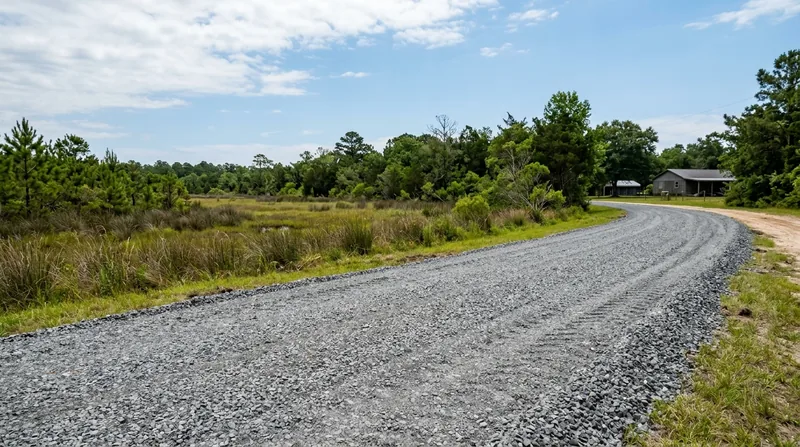




Gravel driveways on Wilmington's flat, sandy peninsula face a singular challenge: water pooling. Our coastal terrain sits close to the water table, and the heavy rains that come with hurricane season drain poorly from ground that slopes almost imperceptibly. A gravel driveway installation and grading job done right means shaping the base so rain runs off instead of settling, compacting each lift of stone so it stays put, and pitching the surface to shed water fast. We've worked on gravel lanes across Wilmington, Kings Grant, Ogden, and Porters Neck, and the difference between a drive that lasts and one that turns to mud comes down to grading, compaction, and drainage. If you're building a new gravel drive or restoring one that's settled, we handle the base preparation, the shaping, and the material placement to keep your surface stable through wet seasons.
Why Gravel Driveway Grading Matters on Wilmington's Flat, Sandy Ground
Wilmington's geography works against gravel. The peninsula slopes so gently that a driveway that looks flat to the eye actually is flat, and flat ground in a high water-table area collects standing water. When rain falls, it has nowhere to go. The sandy subgrade underneath becomes saturated, the gravel sinks, and ruts form where water has pooled. Proper grading solves this by creating slope, even slight slope, so water moves toward the edges and away from the drive. Compaction in lifts is equally critical: loose gravel shifts under traffic and under weight, especially when it's wet. A well-graded, properly compacted gravel drive will hold its shape and shed water instead of becoming a mud pit after the next tropical system or summer downpour.
- We establish proper pitch so rain runs off the surface rather than pooling in the center or at the edges.
- We compact each lift of base material and stone with equipment, preventing settlement and rut formation under traffic.
- We shape the subgrade to support the gravel layer and direct subsurface water away from the driving surface.
- We specify stone size and depth based on your lot's drainage and traffic load, so the material stays in place through wet seasons.
- We create edge confinement where needed to prevent gravel from washing into adjacent landscaping or ditches during heavy rain.
A properly graded gravel driveway stays stable and usable year-round, even through Wilmington's wet months and hurricane season.
Key info: Wilmington's water table sits close to the surface, especially in newer subdivisions backing up to tidal creeks and marshland. Without proper grading and compaction, gravel drives settle and rut within months. Correct pitch and compaction prevent this, and the investment pays back in years of stable driving surface.
For more on how we approach site preparation and grading across all our services, see our work on asphalt driveway paving and installation, where base preparation is equally critical.
How We Grade and Install a Gravel Driveway in Wilmington: Our Process
Gravel driveway work starts with understanding your lot. We look at the slope, the drainage patterns, the soil type, and the traffic load your drive will see. From there, we shape the subgrade, lay and compact the base courses, and top it with the right stone. The goal is a drive that sheds water, stays compacted, and doesn't rut or wash out. We measure the site, calculate the tonnage needed, and give you a written estimate with material specs so you know exactly what you're getting.
- We visit your site to assess slope, existing drainage, soil conditions, and the footprint of the new or existing drive.
- We clear and shape the subgrade, removing soft or saturated soil and building up the foundation to proper elevation and pitch.
- We lay the base course in lifts, compacting each one with a vibratory roller so the stone binds and won't shift under traffic.
- We place the top course of gravel or crushed stone, sized to stay in place and shed water while providing a clean, firm driving surface.
- We proof-roll the finished drive to verify compaction and stability before you take possession.
- We provide written tonnage specs and material grades so you have a record of what was installed.
The result is a gravel drive that handles Wilmington's wet seasons without rutting, settling, or washing out at the edges.
Local example: A ranch-style home in Murraysville with a 250-foot gravel drive had standing water in the center after every heavy rain. We regraded the entire drive with proper slope, replaced the top stone, and compacted in lifts. Three years later, the drive still sheds water cleanly and shows no rutting, even after hurricane-season storms.
If your existing gravel drive has settled or washed out, we can assess whether regrading and fresh material will restore it, or whether you'd prefer to move to a more permanent surface. Learn more about your paving options in our guide to asphalt resurfacing and overlay, which is another path if you want a longer-lasting surface.
Gravel Driveway Methods and Materials: What Works in Wilmington
| Approach | Description | Best for |
|---|---|---|
| Crushed Stone Base with Gravel Top | Larger crushed stone (1.5 to 2 inches) compacted as base, topped with smaller gravel (0.75 inch) for a firm, clean surface. | Most Wilmington residential driveways; cost-effective and sheds water well when properly graded. |
| Jersey Shore Gravel | Angular crushed stone with fines that compact tightly, reducing washout and rut formation. | Drives in high-traffic areas or where edge erosion has been a problem; more stable than rounded pit run. |
| Recycled Asphalt Millings | Reclaimed asphalt chunks and dust that compact and bind over time, creating a semi-solid surface. | Budget-conscious homeowners; works well on Wilmington's sandy ground if graded correctly. Learn more about recycled asphalt and millings driveways. |
| Regrading Existing Drive | Reshaping and recompacting existing stone without replacing all material, adding fresh top course as needed. | Drives that have settled but retain good base material; extends life and improves drainage at lower cost than full replacement. |
Gravel Driveway Installation and Grading Cost in Wilmington: What to Expect
A gravel driveway installation with proper grading typically starts at $950 for a smaller drive, but the real cost depends on several concrete factors. The size of the driveway is the primary driver: a 300-foot drive costs significantly more than a 100-foot one because of the volume of material and the time to grade and compact. The condition of your existing subgrade matters too. If the ground is soft, saturated, or unstable, we may need to excavate deeper and bring in additional fill before laying stone, which increases the price. The type of stone you choose makes a difference as well. Jersey Shore gravel or recycled asphalt costs less than premium crushed stone, but each has trade-offs in durability and appearance. Access to the site also factors in: if we have to carry equipment around trees or structures, or if the lot is tight, the labor cost goes up.
Getting written estimates from two or three contractors is essential. A real estimate should include the square footage of the drive, the depth and type of base material, the tonnage of top stone, and the pitch or slope you'll be paying for. Avoid estimates that give only a per-square-foot price without specifying material and depth. For a detailed breakdown of what gravel driveways cost compared to other surfaces, visit our pricing page, which lays out starting points for different services.
If your existing gravel drive just needs regrading and fresh material, the cost is lower than a full installation on bare ground. If you're considering a move to asphalt or recycled millings, we can walk you through the cost difference and the pros and cons of each. Call us at (910) 338-1662 for a free, no-obligation estimate.
Gravel Driveway Installation and Grading Near Me: What Wilmington Homeowners Should Know When Hiring
Choosing a contractor for gravel driveway work means checking a few basics. First, make sure the contractor is fully insured, so you're protected if something goes wrong on your property. Ask for references from past jobs in Wilmington or nearby areas, and call them. A contractor who has graded driveways on Wilmington's sandy, high-water-table ground knows the local drainage challenges and won't oversell you a flat drive that pools water. Get everything in writing: the square footage, the material type and tonnage, the depth of base and top course, and the final price. If your lot is in an HOA community, check your architectural guidelines before you commit. Some HOAs restrict gravel and require asphalt or a specific stone color. If your driveway is near a property line or includes a culvert or drainage structure, your local municipality may require a permit. Wilmington's permitting rules vary by neighborhood, so ask your contractor to help you navigate local requirements, or call your building department directly.
- Request references from Wilmington-area jobs and call them to ask about drainage, settling, and how the drive has held up.
- Ask for a written estimate that specifies material type, tonnage, depth, and pitch so you know what you're paying for.
- Verify that the contractor is fully insured and ask for a certificate of insurance before work begins.
- Check your HOA architectural guidelines if you're in a master-planned community; gravel may be restricted or subject to color or size specifications.
- Contact your local building department to confirm whether a permit is required for grading or driveway work in your area.
- Confirm that the contractor will call 811 before excavating to locate underground utilities, as required by North Carolina law.
A contractor who takes time to understand your lot, gives you a detailed estimate, and explains how they'll manage Wilmington's drainage challenges is the one to hire. Contact us at our contact page for a free estimate, or call (910) 338-1662.
Gravel Driveway Installation & Grading in Wilmington: Pricing Guide
| Service | Price | Details |
|---|---|---|
| Gravel Driveway Installation, Standard | Starting at $950 | Base grading, compaction, and top stone for drives up to 200 linear feet on stable ground with minimal excavation required. |
| Regrading and Fresh Stone | Starting at $750 | Reshape, recompact, and top existing gravel drive without full excavation or subgrade replacement, extends life and improves drainage. |
| Larger or Complex Drive | On estimate | Drives exceeding 300 feet, saturated subgrade requiring excavation, or multiple base lifts with premium stone require site assessment and written quote. |
| Recycled Asphalt Millings Installation | Starting at $650 | Grading and placement of recycled asphalt for budget-conscious homeowners; material cost lower than crushed stone, compacts over time. |
| Travel | Included | No separate mileage or call-out fee for Wilmington and surrounding areas within our service radius. |
| Free Estimate | No charge | Written estimate with tonnage specs and material grades, response within 24 hours, no obligation to book. |
Indicative pricing, the exact cost depends on square footage, finish, and site access. Free personalized estimate within 24h at (910) 338-1662.


