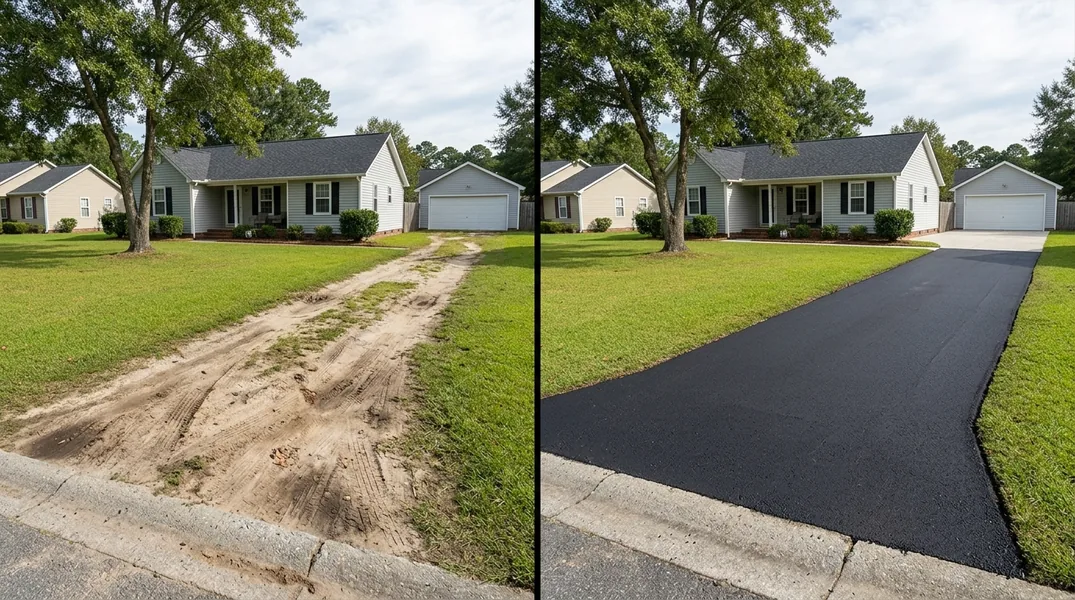
Understanding Sandy Soil Challenges in Wilmington
Homeowners in Wilmington face a unique challenge when it comes to driveway installation and maintenance: sandy, coastal soil. The area's proximity to the Atlantic Ocean and its naturally sandy composition create specific pressures that standard driveways must withstand. Sandy soil tends to shift and settle unevenly, which can cause foundation instability beneath your driveway. This movement is especially problematic during heavy rainfall, when sand becomes saturated and loses its structural integrity, or during dry periods, when it compacts and contracts.
Understanding how your soil behaves is the first step in choosing between asphalt vs concrete driveway options. Both materials respond differently to the stresses that sandy soil creates, and the choice you make now will affect your driveway's longevity, maintenance requirements, and overall cost of ownership. Before deciding, it's important to evaluate how each material performs under the specific conditions found in coastal North Carolina.
Asphalt Driveway Paving & Installation: Flexibility in Sandy Conditions
Asphalt Driveway Paving & Installation is often the preferred choice for homeowners dealing with sandy soil because of its inherent flexibility. Unlike concrete, asphalt is a flexible material that can move and shift slightly as the ground beneath it settles. This flexibility is a major advantage in Wilmington, where sandy soil naturally expands and contracts with changes in moisture and temperature. When your soil moves, asphalt moves with it, reducing the likelihood of cracking and breaking that plagues rigid concrete surfaces.
The resilience of asphalt also means that minor settling won't immediately damage your driveway. Instead of developing the large, structural cracks that concrete experiences, asphalt can accommodate gradual soil movement without losing its integrity. This characteristic makes asphalt particularly well-suited to coastal environments where soil composition is less stable than in areas with clay or loam-based foundations. Additionally, asphalt's dark surface helps it absorb heat, which can actually help stabilize sandy soil by reducing excessive moisture retention during humid coastal summers.
Concrete Driveways: Rigidity and Sandy Soil Complications
Concrete driveways are rigid by nature, which works against them in sandy soil conditions. When concrete is poured over unstable ground, any settling or shifting of the sand beneath creates stress points on the surface. These stress points lead to cracking, which typically begins at the edges and corners where concrete is thinnest and most vulnerable. In Wilmington's sandy environment, concrete driveways often develop spider-web cracks within just a few years of installation, especially if proper base preparation hasn't been done.
The rigid nature of concrete means that once cracking begins, it tends to accelerate. Water seeps into cracks, freezes during occasional winter cold snaps, and expands, forcing the cracks wider. This freeze-thaw cycle, combined with the coastal salt air, can cause concrete to deteriorate more rapidly than asphalt. While concrete can last 25 to 30 years in ideal conditions, sandy soil environments often cut that lifespan significantly shorter. Repairs to concrete driveways are also more expensive and less seamless than asphalt repairs, as patches are often visible and may require replacement of large sections rather than simple patching.
Asphalt Driveway Lifespan: What to Expect in Coastal North Carolina
The asphalt driveway lifespan in Wilmington typically ranges from 15 to 20 years with proper maintenance, though this can extend beyond 20 years if you invest in regular care. Coastal conditions, including salt spray and humidity, can accelerate asphalt aging if left unprotected, but seal coating and routine maintenance can significantly extend your driveway's life. The flexibility of asphalt means that even as your driveway ages, it's less likely to develop the catastrophic failures that plague concrete in sandy environments.
One of the advantages of asphalt is that it can be easily maintained and repaired throughout its lifespan. Driveway Repair work on asphalt is straightforward and cost-effective. Whether you need Pothole Repair & Asphalt Patching or full Asphalt Resurfacing & Overlay, these services can restore your driveway's appearance and functionality without requiring complete replacement. This means you can get more value from your initial investment by spreading maintenance costs over time rather than facing a sudden need for complete removal and replacement.
Cost Comparison: Asphalt vs. Concrete in Wilmington
When comparing initial installation costs, asphalt is typically less expensive than concrete. However, when you factor in long-term maintenance and the reality of sandy soil conditions in Wilmington, the financial picture becomes more favorable for asphalt. Concrete may seem like a bargain upfront, but if it requires major repairs or replacement within 10 to 15 years due to soil-related cracking, you'll ultimately spend more money. Asphalt's lower upfront cost combined with its ability to handle sandy soil movement means better overall value for most homeowners.
To understand the true cost of your driveway investment, consider getting a free estimate from Wilmington Asphalt Paving. Our team can assess your specific soil conditions and provide detailed pricing for both materials, allowing you to make an informed decision based on your budget and long-term plans. When you factor in maintenance requirements, repair costs, and expected lifespan, asphalt typically offers superior value for homeowners in coastal areas with sandy soil.
Making Your Decision: Asphalt Over Concrete Driveway
If you're considering installing asphalt over concrete driveway as an option, this is actually a viable solution for homeowners with existing concrete that's beginning to fail. Placing a layer of asphalt over damaged concrete can extend the life of your driveway and provide the flexibility benefits of asphalt without the cost of complete concrete removal. This overlay approach works particularly well in Wilmington where sandy soil conditions have already compromised concrete surfaces.
The choice between asphalt and concrete ultimately depends on your specific circumstances, but for homeowners in sandy soil regions, asphalt consistently proves to be the more practical choice. Its flexibility accommodates soil movement, its maintenance is straightforward and affordable, and its lifespan can be extended through proper care. Rather than gambling on concrete's performance in unstable soil, asphalt offers a proven solution that has served countless homeowners in coastal North Carolina successfully. If you're ready to move forward with a durable asphalt driveway solution, contact Wilmington Asphalt Paving at (910) 338-1662 to discuss your project and receive a customized recommendation based on your property's unique soil conditions.
Looking for a professional asphalt paving contractor in Wilmington? Wilmington Asphalt Paving responds fast for all your asphalt paving needs.
Get a Free Quote